
Surfblessures
Zee-egelstekels: verwijderen, nazorg en wanneer u naar een arts moet
18 jan 2026 · 5 min lezen
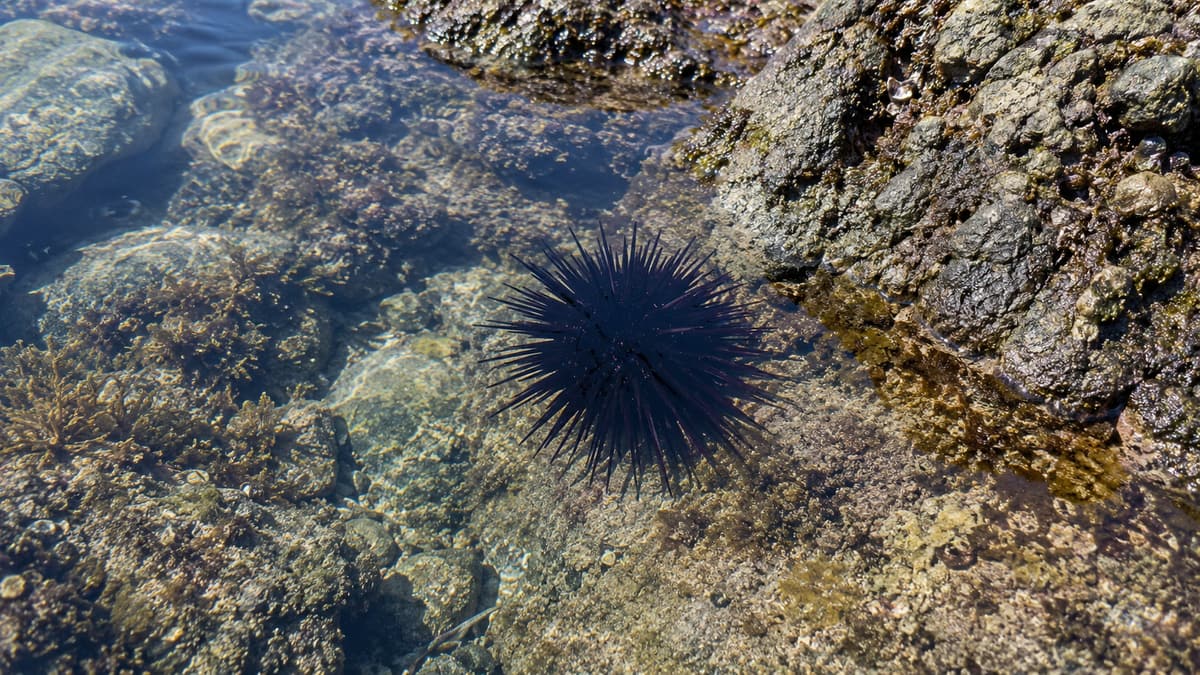
Zee-egels zijn de kleine, donkere, stekelige dieren die zich vastklampen aan rotsen en rif. Hun stekels zijn zo gemaakt dat ze afbreken wanneer iets ze verstoort — wat betekent dat ze afbreken wanneer iets ú verstoort. De meeste mensen stappen erop terwijl ze bij eb over het rif lopen, of krijgen ze in hun handen wanneer ze bij een val naar rotsen grijpen.
De stekels bestaan uit calciumcarbonaat, zijn broos en hebben een punt met een mild irriterend middel. Sommige soorten hebben giftige stekels die ernstigere pijn veroorzaken, maar de zee-egels in de Sri Lankaanse wateren zijn meestal van de minder gevaarlijke soort.
Hoe het voelt
Een scherpe, branderige pijn op het moment van contact, gevolgd door een diepe pijn die uren aanhoudt. De prikwondjes zijn heel klein, maar de stekels zelf kunnen diep gaan — soms een centimeter of meer in de voet. Als u de voet omhoog brengt en kijkt, ziet u meestal een of meer donkere plekjes waar stekels vastzitten.
De stekels verwijderen
Dit is waar de meeste mensen de fout ingaan. Zee-egelstekels zijn broos. Ze breken gemakkelijk wanneer u ze met een pincet probeert vast te pakken. Een stekel die halverwege afbreekt, is moeilijker te verwijderen dan de oorspronkelijke stekel.
De juiste aanpak hangt af van hoeveel stekels erin zitten, hoe diep en waar:
- Zichtbare, uitstekende stekels: gebruik voorzichtig een schoon pincet om ze te verwijderen, en trek recht langs de hoek waarin ze naar binnen gingen. Draai niet.
- Stekels die gelijk met de huid liggen of net eronder: ga niet wroeten. Dit veroorzaakt meer schade en versplintert de stekel meestal. Kom langs, dan verwijderen we ze goed onder vergroting, vaak met een kleine incisie.
- Veel stekels, of stekels in de voetzool, de handen of bij gewrichten: kom langs. Verwijdering op deze plekken is priegelig en infectiegevoelig, en wij kunnen het gebied eerst verdoven.
Hoe zit het met azijn?
Een populaire volksremedie is om het gebied dertig minuten in azijn te weken, in de veronderstelling dat azijn het calciumcarbonaat oplost. Daar zit iets van waarheid in — azijn zal heel kleine fragmenten langzaam verzachten en oplossen — maar het werkt niet snel of grondig genoeg om de hoofdbehandeling voor zichtbare stekels te zijn. U kunt in azijn weken als eerste stap terwijl u beslist of u de grotere stekels zelf verwijdert of naar ons toe komt.
Nazorg
Zodra de stekels eruit zijn:
- Was grondig met zeep en zoet water
- Breng antiseptisch middel aan (povidonjodium of chloorhexidine)
- Dek af met een schoon verband
- Neem paracetamol tegen de pijn
- Blijf uit het water tot de prikwondjes gesloten zijn (meestal twee tot vier dagen)
Let de komende week op tekenen van infectie: zich verspreidende roodheid, toenemende pijn, pus, warmte, koorts of rode strepen. Stekels die volledig zijn verwijderd, geven vrijwel nooit problemen. Achtergebleven fragmenten kunnen een aanhoudende infectie veroorzaken, een klein knobbeltje, of wat een granuloom wordt genoemd — een chronische bult die weken of maanden kan duren om te verdwijnen.
Wanneer u meteen moet langskomen
- Meerdere stekels, vooral in de voetzool
- Stekels in de handen, bij gewrichten of bij de ogen
- Stekels die onder de huid zijn afgebroken
- Hevige pijn die niet reageert op paracetamol
- Tekenen van een allergische reactie (zwelling buiten het plaatselijke gebied, ademhalingsmoeilijkheden, duizeligheid)
- De wond is meer dan een paar uur oud en u heeft niet alle stekels kunnen verwijderen
Verwijdering gaat snel en pijnloos zodra we het gebied hebben verdoofd. We controleren ook of u een tetanusinjectie nodig heeft, en schrijven antibiotica voor als de wond een hoog risico heeft.
Dit artikel bevat algemene gezondheidsinformatie en is geen vervanging voor medisch advies.
Gerelateerde artikelen
Surfblessures
Verstuikte enkels en knieën: surf- en rifwandelblessures in Arugam Bay
Een verzwikte enkel tijdens het lopen over het rif of een verdraaide knie bij te snel opstaan zijn twee van de meest voorkomende surfblessures die we zien. Zo herken je het verschil tussen een verstuiking en een breuk.
8 min lezen
Surfblessures
Hoofdletsel en hersenschudding na een surfwipeout in Arugam Bay
Een harde wipeout bij Main Point of Peanut Farm kan meer zijn dan een tik — zo herken je een hersenschudding, wat je in de eerste uren moet doen, en wanneer je langs moet komen.
7 min lezen
Surfblessures
Kwallensteken aan de oostkust van Sri Lanka: eerste hulp die echt werkt
Het meeste wat u gehoord heeft over het behandelen van kwallensteken klopt niet. Zo pakt u het aan in Arugam Bay, per soort die u waarschijnlijk tegenkomt.
5 min lezen